
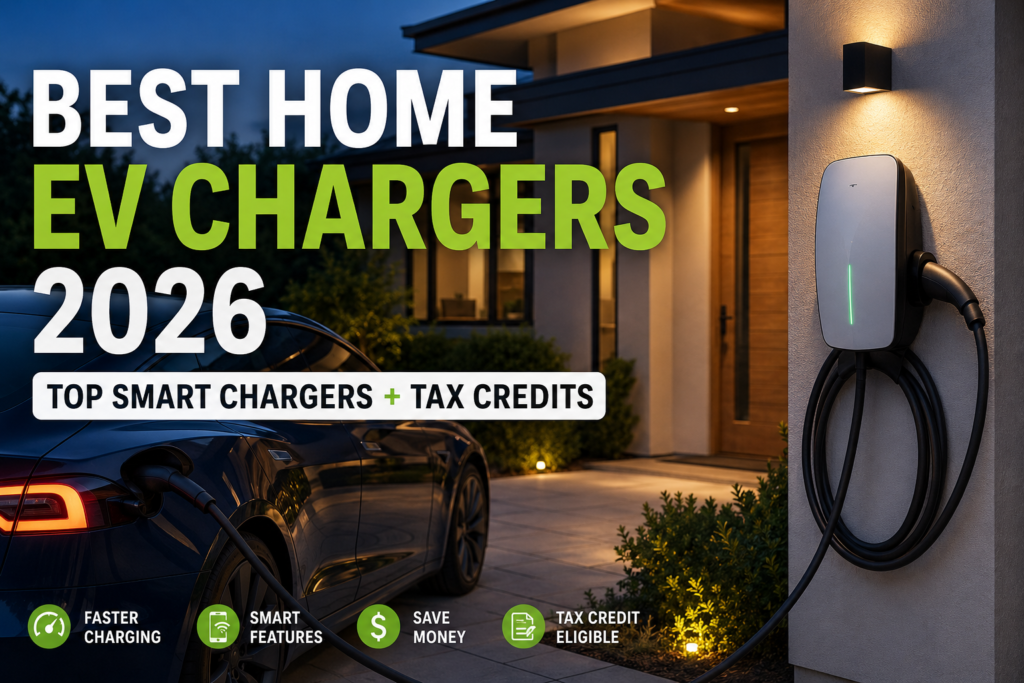
Quick Answer: The best home EV chargers in 2026 combine fast charging speeds, smart energy management, and potential federal tax credit eligibility. Many homeowners are upgrading to Level 2 chargers to reduce charging costs and improve daily convenience.
Best Home EV Chargers 2026: Top Smart Level 2 Chargers That Could Save You Hundreds
Compare elite smart Level 2 home EV chargers for Tesla and all major electric vehicles. Uncover real charging speeds, setup costs, federal tax credits, and smart energy optimization tactics.
Investing in a Level 2 smart EV charger eliminates the frustration of public charging infrastructure. By pairing a high-speed home unit with time-of-use utility rates or rooftop solar, drivers can fully recharge overnight for a fraction of the cost of traditional gasoline.
Table of Contents
As electric vehicles continue expanding across households nationwide, securing a reliable, fast, and intelligent home charging setup is paramount. Choosing the right charger streamlines daily driving routines, protects vehicle battery health, and maximizes savings when paired with off-peak electricity hours.
This comprehensive 2026 guide breaks down top-rated options, including smart units tailored for Tesla owners, reliable budget alternatives, and powerful multi-vehicle management systems.
Why Home EV Chargers Matter in 2026
While public charging stations are convenient for long-distance travel, home charging remains the absolute cornerstone of efficient EV ownership:
- Daily Convenience: Wake up every morning to a 100% full battery without detouring to commercial stations.
- Drastic Savings: Tap into off-peak utility pricing schedules to charge your vehicle at rock-bottom rates.
- Smart Automation: Use cloud companion apps to schedule charging cycles around peak grid hours.
- Superior Speeds: Level 2 hardware transfers electricity up to 8x faster than standard wall plugs.
Many homeowners upgrading their electrical service for an EV charger also explore solar panels, home storage batteries, and smart home automation. For related savings guides, check out our resources on the Solar Tax Credit 2026 and Home Energy Rebates 2026.
Best Home EV Chargers in 2026
1. ChargePoint Home Flex
The undisputed industry benchmark for smart home charging. The ChargePoint Home Flex merges extreme amperage flexibility, robust build quality, and an industry-leading smartphone app experience.
- Up to 50 Amp adjustable output
- Universal J1772 vehicle compatibility
- Detailed energy analytics & scheduling
- NEMA 4 weather-resistant enclosure
- Hardwired or plug-in installation
2. Tesla Universal Wall Connector
Featuring a brilliant built-in Magic Dock adapter, Tesla’s flagship wall unit seamlessly handles both Tesla vehicles and standard J1772 electric cars without requiring loose adapters.
- Integrated Magic Dock (Tesla + J1772)
- Up to 48A high-speed output (11.5 kW)
- Sleek, minimalist architectural aesthetic
- Wi-Fi over-the-air firmware updates
- Dynamic power sharing capabilities
3. Grizzl-E Level 2 Charger
Encased in heavy-duty aluminum, the Grizzl-E is engineered for extreme weather durability. It is the premier choice for drivers who want robust, high-output charging without paying for complex smart apps.
- Rugged weather-proof metal housing
- Configurable up to 40A or 48A
- Straightforward plug-and-play reliability
- Exceptional price-to-performance ratio
- Comprehensive internal safety protections
4. JuiceBox 40 Smart EV Charger
The JuiceBox 40 delivers stellar smart-grid integration, dynamic power management, and advanced utility program compatibility to help users optimize charging costs effortlessly.
- Dynamic smartphone application dashboard
- Utility demand-response synchronization
- Reliable 40-amp Level 2 output
- Secure anti-theft locking bracket
- Detailed charge history reports
Federal EV Charger Tax Credit Explained
Qualifying home EV charging equipment and professional installation costs may be eligible for federal tax incentives under IRC Section 30C, subject to current IRS guidelines, property specifications, and geographic census tract regulations.
- Tax Credit Savings: Potential credit coverage for a percentage of hardware and installation expenses.
- Geographic Rules: Low-income or non-urban residential locations frequently hold higher priority status.
- Professional Verification: Always verify eligibility with a certified tax professional or review official IRS resources before filing.
Compare additional savings with our EV Charger Rebates 2026 reference.
Level 1 vs. Level 2 EV Chargers
| Metric | Level 1 Charging | Level 2 Charging |
|---|---|---|
| Charging Speed | Slow (2 to 5 miles of range per hour) | Fast (12 to 40+ miles of range per hour) |
| Electrical Input | Standard 120V household outlet | Dedicated 240V circuit (dryer style plug) |
| Setup Requirement | Plug and play into any standard wall socket | Requires licensed electrician or 240V outlet |
| Ideal For | Plug-in hybrids or ultra-low mileage drivers | Primary battery electric vehicles (BEVs) |
Smart Energy Upgrades for EV Homes
Modern home energy management doesn’t stop at vehicle charging. Integrating backup power systems and smart climate controls maximizes overall household efficiency.
EcoFlow DELTA Portable Power Station
Deliver clean, reliable emergency backup power for vital household electronics during unforeseen grid interruptions without the complexity of permanent standby battery installations.
Google Nest Smart Thermostat
Optimize heating and cooling cycles to slash monthly utility expenses. When combined with intelligent EV charging schedules, it completes an automated green home infrastructure.
How Much Does It Cost to Charge an EV at Home?
Switching from gasoline to electricity yields enormous long-term savings. Operating costs depend directly on local utility rates per kilowatt-hour (kWh), battery capacity, and off-peak rate incentives.
For instance, filling a 75 kWh battery from empty at a national average residential rate of $0.16/kWh equals roughly $12.00, providing over 250 miles of emission-free driving range.
Common EV Charger Installation Mistakes
- Undersized Electrical Capacity: Selecting high-amperage units without verifying main electrical panel limits.
- Weatherproofing Failures: Placing non-rated indoor hardware outdoors in exposed elements.
- Poor Wi-Fi Signal: Failing to ensure stable wireless coverage in the garage for app monitoring.
- Skipping Certified Electricians: Attempting hazardous DIY 240V hardwire setups that violate local building codes.
Frequently Asked Questions
What is the best home EV charger in 2026?
The ChargePoint Home Flex is our highest-rated overall pick due to universal compatibility and software reliability, while the Tesla Universal Wall Connector leads for multi-vehicle homes.
Do home EV chargers qualify for tax credits?
Yes, qualifying equipment and installation labor may qualify for federal tax credits or regional utility rebates depending on location and IRS compliance rules.
Is Level 2 charging worth the investment?
Without question. Level 2 hardware transforms EV ownership by fully restoring vehicle range overnight, eliminating reliance on public fast-charging stations.
Can solar panels power an EV charger?
Yes. Pairing rooftop photovoltaic solar arrays with a smart home charger allows you to run your vehicle entirely on clean, on-site solar generation.
Pros & Cons of Installing a Home EV Charger
The Pros
- Fast, seamless overnight recharging
- Significantly lower fueling expenses
- Smart app scheduling capabilities
- Eligible for potential tax credits
- Enhances residential property value
The Cons
- Upfront equipment hardware costs
- Potential electrician labor fees
- Possible electrical panel upgrades
- Requires dedicated off-street parking
Related Energy Incentive Guides
- Florida EV & Energy Rebates 2026
- EV Charger Rebates 2026
- Solar Tax Credit 2026
- California Solar Rebates 2026
- Colorado Solar Rebates 2026
- Home Energy Rebates 2026
- Solar Payback Calculator 2026