
Heat Pump Water Heater Rebates 2026: How Homeowners Can Lower the Cost of a High-Efficiency Water Heater
Heat pump water heaters can potentially reduce water-heating electricity consumption while qualifying homeowners may be able to reduce the upfront cost through rebates, utility incentives, income-qualified programs and other energy-efficiency incentives.
What Are Heat Pump Water Heater Rebates?
If you’re researching heat pump water heater rebates in 2026, the first thing to understand is that incentives are not necessarily provided through one nationwide program. Depending on where you live, financial assistance may come from your electric utility, state energy agency, local program, income-qualified initiative or another participating organization.
Heat pump water heaters have become an increasingly important residential efficiency technology because they use a heat pump to move heat from the surrounding air into the water tank. This differs from a conventional electric resistance water heater, which generates heat directly through electrical heating elements.
The technology can offer homeowners an opportunity to reduce the amount of electricity required for water heating. When a qualifying rebate is also available, the incentive can reduce the upfront cost of making the upgrade.
The challenge is identifying exactly which incentives apply to your home. A rebate advertised online may have geographic restrictions, equipment requirements, income limits, application deadlines, contractor requirements or limited funding.
This guide explains how heat pump water heater incentives work in 2026, where homeowners can look for programs, what equipment requirements may matter, how applications generally work, and which mistakes can cause a homeowner to miss an available incentive.
A heat pump water heater, sometimes marketed as a hybrid water heater, uses electricity to operate a heat pump that captures heat from the surrounding air and transfers that heat into the water stored inside the tank.
Instead of producing all of the heat directly through electrical resistance, the system uses a refrigeration cycle to move existing heat. Under appropriate operating conditions, this can make the system significantly more energy efficient than conventional electric resistance water heating.
Many residential systems also include multiple operating modes. Depending on the model, homeowners may be able to prioritize efficiency, increase hot-water availability or allow electric resistance heating to assist when additional capacity is required.
Heat Pump Water Heater vs. Conventional Electric Water Heater
Conventional Electric
Uses electrical resistance heating elements to directly heat the water. The system is relatively straightforward, but the heating process generally requires more electricity than a heat pump system under comparable conditions.
Heat Pump Water Heater
Uses a heat pump to transfer heat from surrounding air into the water. The technology can reduce electricity consumption and may qualify for specific efficiency incentives when program requirements are met.
Are Heat Pump Water Heater Rebates Available in 2026?
Yes, homeowners may find heat pump water heater rebates in 2026, but eligibility depends on the program.
There is no universal rebate amount that every homeowner receives simply for purchasing a heat pump water heater. Instead, incentives can be administered through different levels of government, utilities and energy organizations.
A homeowner in one utility territory may have access to a significant appliance rebate, while another homeowner in the same state may have a completely different incentive structure.
Income-qualified programs can create another layer of potential assistance. In some cases, households meeting specific income requirements may have access to enhanced incentives compared with standard customers.
Where Can You Find Heat Pump Water Heater Rebates?
Searching in only one place can cause homeowners to miss potential incentives. A more complete approach is to check several sources.
Electric Utilities
Your electricity provider may offer rebates for qualifying high-efficiency water heaters and other residential energy upgrades.
State Energy Programs
State agencies may operate energy-efficiency programs or direct homeowners toward available residential incentives.
Income-Qualified Programs
Some programs offer enhanced assistance to households meeting specified income and household-size requirements.
Local Programs
Municipalities, regional organizations and other local entities may offer additional incentives depending on the area.
Rebate Radar’s Home Energy Rebates 2026 guide provides a broader starting point for researching residential energy incentives.
Why Your Location Matters So Much
One of the most important variables in any rebate search is the location of the property. Many homeowners assume that a state-level incentive applies uniformly throughout the state, but utility territories can create significant differences.
Two homes located only a few miles apart can potentially have access to different utility incentives if they receive electricity from different providers.
This is why a good rebate search should identify both your state and your electric utility.
- Identify the state where the property is located.
- Identify the electric utility serving the property.
- Search the utility’s current residential rebate programs.
- Check state-level energy-efficiency programs.
- Investigate income-qualified incentives if applicable.
Income Requirements for Heat Pump Water Heater Rebates
Income can be particularly important for homeowners looking for enhanced energy-efficiency incentives. Some programs use household income and household size when determining eligibility, while others use different qualification methods.
An income-qualified incentive can potentially provide more assistance than a standard customer rebate. However, the applicant may have to provide additional documentation to establish eligibility.
Depending on the program, documentation could include proof of income, household information, utility records, proof of residence or other supporting documents.
What Heat Pump Water Heaters Qualify for Rebates?
Purchasing a heat pump water heater does not automatically make the installation eligible for every available incentive.
Rebate programs can establish technical requirements related to efficiency, certification, capacity, installation method and equipment specifications.
Some programs publish lists of eligible equipment. Others may require the homeowner or contractor to verify the model number through a program database or approved equipment list.
Why the Exact Model Number Matters
Two products can look almost identical while having different technical specifications. A difference in efficiency certification or model configuration can affect eligibility.
For this reason, homeowners should record the exact manufacturer, model number and applicable efficiency information before purchasing.
- Confirm the exact manufacturer and model.
- Check the program’s eligible-equipment list if available.
- Verify the required efficiency rating or certification.
- Confirm the tank capacity meets program requirements.
- Check whether installation by a qualifying contractor is required.
- Save the model documentation and purchase records.
Why You Should Check the Rebate Before Buying
Timing is one of the most important parts of the rebate process.
Some homeowners purchase equipment first and search for incentives later. That can create a problem if the program requires pre-approval, a participating contractor, a specific equipment model or an application before installation.
A better strategy is to identify the incentive first, determine which equipment qualifies, and then purchase the system that satisfies the program requirements.
How to Apply for a Heat Pump Water Heater Rebate
Although every program has its own process, most rebate applications can be approached using a similar sequence.
Identify Your Utility
Determine which electricity provider serves the property and review its current residential energy-efficiency programs.
Review Program Requirements
Check eligibility, rebate amount, equipment requirements, deadlines, contractor rules and documentation requirements.
Verify the Exact Equipment
Confirm that the model you intend to purchase satisfies the program’s technical requirements.
Check for Pre-Approval
Determine whether the program requires approval before purchase or installation.
Complete the Installation
Use the required contractor or installation method if the program establishes those conditions.
Keep Your Documentation
Save invoices, receipts, model information, installation records and any other documents required by the administrator.
Submit the Application
Complete the rebate application and upload or provide the required supporting documentation.
Track the Rebate
Keep your confirmation information and monitor the application until the administrator confirms completion.
What Documents Might You Need?
Requirements differ between programs, but homeowners should generally retain every document associated with the purchase and installation.
- Sales receipt or purchase invoice.
- Contractor invoice.
- Exact equipment model number.
- Proof of installation.
- Utility account information.
- Proof of residency when required.
- Income documentation for income-qualified programs.
Can a Heat Pump Water Heater Lower Your Energy Bills?
One of the primary reasons homeowners consider heat pump water heaters is the potential to reduce electricity consumption associated with producing hot water.
Actual savings vary according to household hot-water demand, electricity rates, climate, equipment settings, household size and other factors.
A household with high hot-water usage may have a different savings profile from a smaller household. Likewise, electricity rates can vary substantially between regions.
Installation cost is another major factor. The most useful way to evaluate the project is to consider the complete installed cost, available incentives, expected energy savings and anticipated equipment life rather than looking only at the purchase price.
Rebates Can Improve the Upfront Economics
A heat pump water heater may cost more upfront than some conventional alternatives. A qualifying rebate can potentially reduce that difference.
The financial calculation therefore involves more than simply asking whether the equipment is cheaper.
Homeowners should consider how much the project costs after incentives and then compare that remaining cost with the expected long-term energy savings.
If you are evaluating a broader residential energy project, Rebate Radar’s Home Energy Rebates Calculator can help you explore potential incentive opportunities across multiple qualifying improvements.
Heat Pump Water Heater Rebates vs. Other Energy Incentives
Homeowners often consider several upgrades at the same time. A heat pump water heater may be part of a larger project involving insulation, space-heating heat pumps, solar panels, batteries, EV charging or other efficiency improvements.
| Incentive Type | What It May Support | What to Verify |
|---|---|---|
| Utility rebate | Qualifying energy-efficient equipment | Service territory, eligible model and current funding |
| State program | Residential energy-efficiency improvements | State eligibility and application rules |
| Income-qualified incentive | Enhanced assistance for qualifying households | Income, household size and documentation |
| Tax incentive | Qualifying energy improvements under applicable tax rules | Current tax rules and qualifying expenses |
| Local incentive | Specific local energy projects | Location, funding and program period |
Why You Should Evaluate Your Whole Home Energy Project
A common mistake is evaluating a heat pump water heater completely on its own. If you’re already planning several upgrades, the better approach is to look at the total project.
For example, a homeowner could potentially evaluate water heating, insulation, heating and cooling, solar, battery storage and EV charging together to determine which improvements provide the strongest combination of incentives and long-term energy savings.
Whether multiple incentives can actually be combined depends on the rules of the individual programs. Never assume that two incentives can be stacked simply because both appear to cover the same project.
Rebate Radar’s Energy Rebates 2026 guide can help you explore the broader residential incentive landscape.
Heat Pump Water Heater Rebate Mistakes to Avoid
Buying Too Early
You may discover that the program requires pre-approval or specific equipment before the project begins.
Assuming Every Model Qualifies
Equipment eligibility can depend on efficiency, certification, capacity and exact model number.
Ignoring the Utility
Your utility territory may determine which incentives are actually available to the property.
Missing Deadlines
Some programs operate with limited funding, enrollment windows or installation deadlines.
Losing Documentation
Missing invoices, model information or installation records can create problems during the application process.
Focusing Only on the Rebate
A rebate does not automatically make an installation financially attractive. Total cost and long-term savings matter too.
Are Heat Pump Water Heaters Worth It in 2026?
For many homeowners, a heat pump water heater is worth evaluating because it combines an efficiency upgrade with the potential for lower electricity consumption over time.
The financial case can become more attractive when a homeowner qualifies for an incentive that reduces the initial cost.
However, there is no universal answer. The best choice depends on the home’s hot-water demand, electricity rates, installation requirements, equipment price and available incentives.
1. Installed Cost
What will you actually pay for the equipment, labor and installation?
2. Incentives
Which rebates or other incentives can actually be claimed?
3. Long-Term Savings
How much could the household potentially save through reduced electricity consumption?
Heat Pump Water Heater Rebate 2026 Decision Checklist
- Check your state energy programs.
- Identify your electric utility.
- Review the utility’s current water-heating rebates.
- Check income-qualified programs if applicable.
- Identify the exact equipment model.
- Verify efficiency and certification requirements.
- Check whether pre-approval is required.
- Confirm contractor requirements.
- Calculate the complete installed project cost.
- Estimate the incentive before purchasing.
- Compare the remaining cost with expected energy savings.
- Keep every document associated with the project.
Explore More Rebate Radar Home Energy Resources
A heat pump water heater may be only one part of a larger residential energy project. Use our additional guides and calculators to explore potential incentives and compare different energy upgrades.
Frequently Asked Questions About Heat Pump Water Heater Rebates
Are heat pump water heater rebates available in 2026?
Yes, some homeowners may have access to rebates or other incentives in 2026. Availability depends on location, utility, equipment eligibility, income requirements and current program rules.
Does every heat pump water heater qualify for a rebate?
No. Programs can establish specific equipment requirements related to efficiency, certification, capacity, model number and installation. Always verify the exact product before purchasing.
Does my utility affect my rebate eligibility?
Yes. Many residential energy-efficiency rebates are administered by utilities, meaning eligibility can depend on the electricity provider serving your property.
Can low-income households receive larger incentives?
Some programs provide enhanced assistance to households meeting specific income and household-size requirements. The exact rules vary by program.
Should I buy the water heater before applying?
Not necessarily. Some programs may require pre-approval or application before purchase or installation. Always check the program rules first.
Can I combine a rebate with another energy incentive?
Sometimes, but homeowners should not assume that every incentive can be combined. Each program may establish its own rules regarding eligible costs and interactions with other incentives.
Are rebate calculators guaranteed to show my actual savings?
No. Calculators can provide estimates, but actual eligibility and incentive amounts depend on current program rules, equipment, household circumstances, funding and other factors.
Final Thoughts: How to Find Heat Pump Water Heater Rebates in 2026
Heat pump water heaters can offer homeowners an opportunity to improve residential energy efficiency while potentially reducing electricity consumption associated with water heating.
Rebates can make the transition more attractive by reducing the initial cost of qualifying equipment. However, the most important part of the process is identifying the right incentive before buying.
Start with your state and utility. Then check whether an income-qualified program applies, verify the exact equipment model, review installation requirements and determine whether pre-approval is necessary.
Once you know which incentives you may qualify for, evaluate the entire project economics. Compare the installed cost, expected incentive and potential long-term energy savings instead of focusing only on the advertised rebate.
If you’re researching additional ways to reduce the cost of residential energy upgrades, explore Rebate Radar’s Home Energy Rebates 2026 resources and our other state-specific guides and calculators.
The goal is not simply to find the largest advertised incentive. The goal is to find the combination of eligible equipment, available incentives and long-term energy savings that makes sense for your particular home.
About Rebate Radar
Rebate Radar is an independent informational publisher focused on helping homeowners understand energy rebates, tax incentives, renewable energy programs, home electrification opportunities and energy-saving technologies.
We are not a government agency, utility company, tax authority or program administrator. Our guides are designed to organize complicated incentive information and make it easier for homeowners to research potential opportunities.
Where appropriate, Rebate Radar distinguishes between official program information and our own educational analysis, comparisons and estimates. Readers should always verify important details directly with the applicable program administrator before making a financial decision.
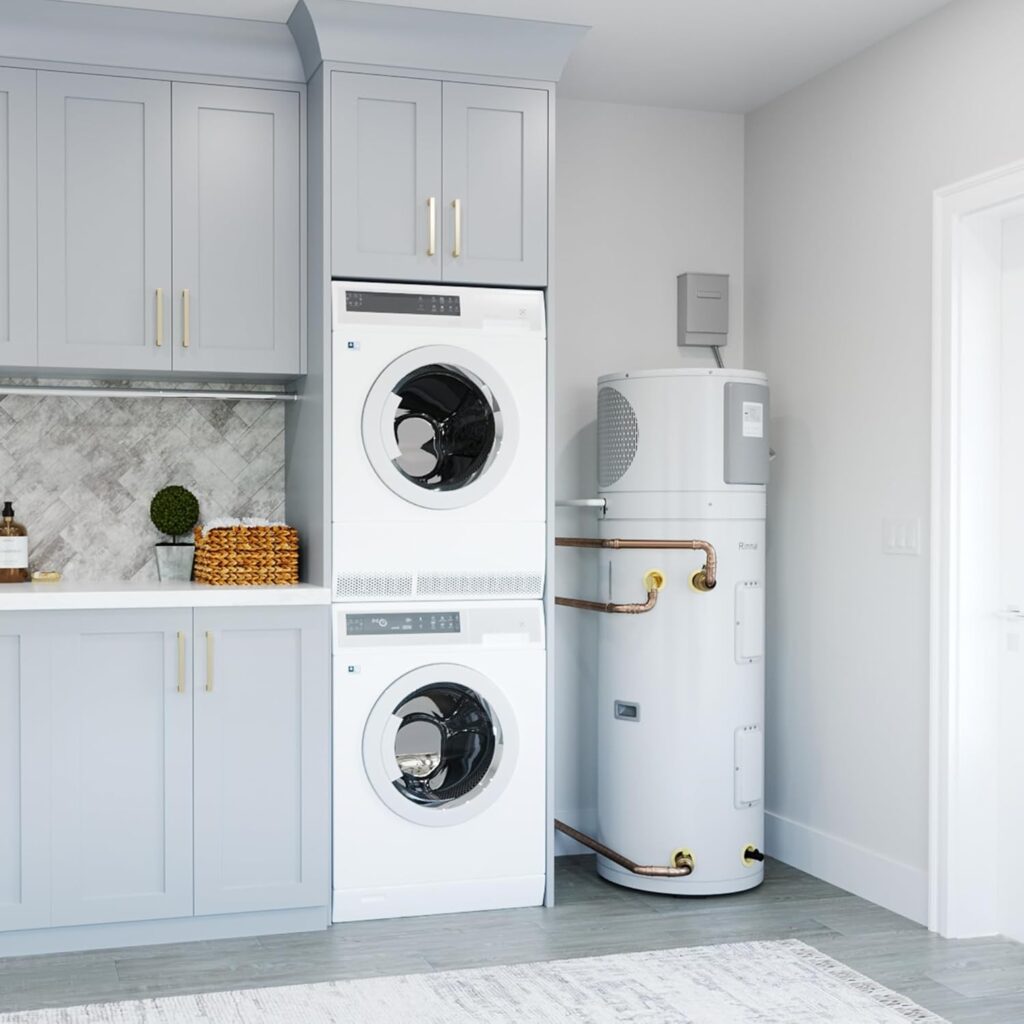
Rinnai REHP80 Electric Heat Pump Water Heater
If you’re researching a heat pump water heater for your home, the Rinnai REHP80 is one model worth comparing. Its heat pump technology is designed to transfer heat from the surrounding air to heat water, providing an alternative to conventional electric resistance water heating.
As an Amazon Associate, Rebate Radar may earn from qualifying purchases. Product availability, specifications and pricing may change. Always verify current product details and rebate eligibility before purchasing.
Pingback: Smart Thermostat Rebates 2026: Get Up To $200 Back
Pingback: Electricity Cost Calculator 2026 – See What Appliances Cost